Designer profile · Bangkok, Thailand
Paveena Chalermsuk

Information verified as of April 2026
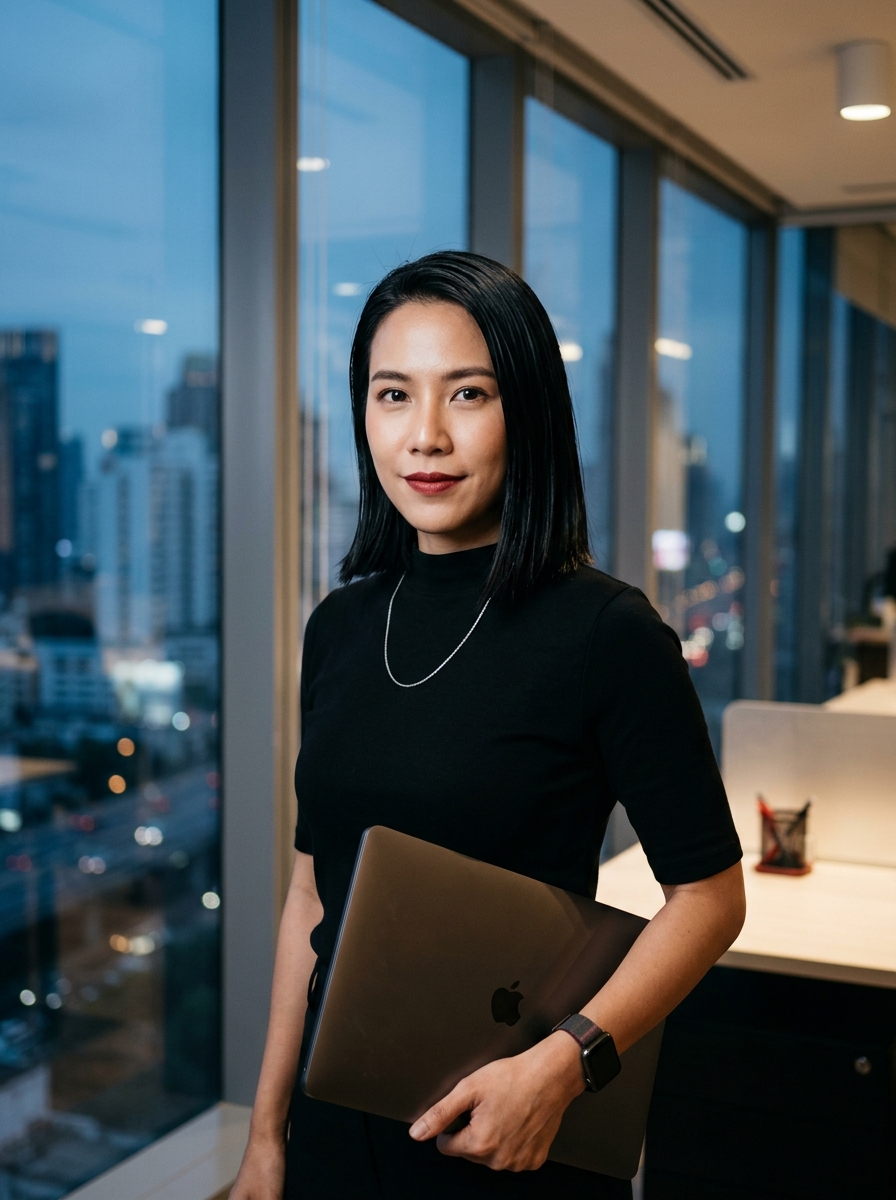
Editorial note: This is a placeholder profile representing the kind of work ThaiGraph covers in this specialty. We will update it with a named subject once submitted via [email protected]. If you are or know Paveena Chalermsuk or a working Thai UI and product designer, please email a portfolio. Submissions open at [email protected] — this is a placeholder profile pending subject confirmation.
The work
A mid-career UI and product designer in Bangkok works inside Figma forty hours a week and ships measurable product change every two-week sprint. The specialty is the applied intersection of visual design, interaction design, and front-end handoff: component library maintenance, screen-level flows, prototype fidelity, accessibility audit, and the specification documents that engineering teams build against.
The typical Bangkok product designer supports one to two products at a time — consumer mobile apps in mobility, food delivery, banking, or e-commerce — and owns either a feature area or a platform (iOS, Android, web) end-to-end. Deliverables include Figma libraries with auto-layout and variants, clickable prototypes, design system documentation, and specification files handed to engineering through Figma Dev Mode or a comparable pipeline. Thai-language interface work — line breaking, word segmentation, bilingual label sizing — is a technical specialty built into the role.
Career arc
Most Thai product designers come from one of two directions: a visual communication degree followed by a lateral move into digital product (the more common path five years ago); or a computer-science or human-computer interaction degree followed by a design specialisation (increasingly common today). Chulalongkorn’s ICT faculty, KMUTT’s School of Architecture and Design, and Assumption University’s MSME design program all place graduates into the Bangkok product-design market.
The career path from junior to senior runs through recognisable employers: LINE Thailand, SCB 10X, KBTG, Agoda, Grab Thailand, Lazada, Shopee, and a growing layer of YC-backed and locally funded startups. A five-to-ten-year arc typically crosses at least two of these, with the transition into a senior or lead role happening at the four-to-six-year mark.
Why this kind of designer matters
Digital product is the fastest-growing slice of Thailand’s creative workforce. Inside the 989,700-person total (CEA, 2024), product and UI designers are concentrated in Bangkok and disproportionately serve the venture-funded and enterprise software market. The quality of Thai product design directly shapes the experience of banking, mobility, and e-commerce for more than sixty million users — a commercial surface area that makes this specialty economically consequential out of proportion to its headcount. See the industry overview.
How this directory works
ThaiGraph’s designer directory is an editorial index of working Thai designers. Profiles are commissioned and verified before publication. This profile is a labelled placeholder written to represent the specialty; the named slot is held for a subject who submits a portfolio through the editorial process. Read about the directory or send submissions to [email protected].
Information verified as of April 2026
Sources
- Thailand's creative workforce is estimated at approximately 989,700 per the Creative Economy Agency.—Creative Economy Agency (CEA), Thailand, 2024 (accessed Apr 10, 2026)