Inspiration · branding · 25 entries
Best Thai Brand Identity Work

Information verified as of April 2026
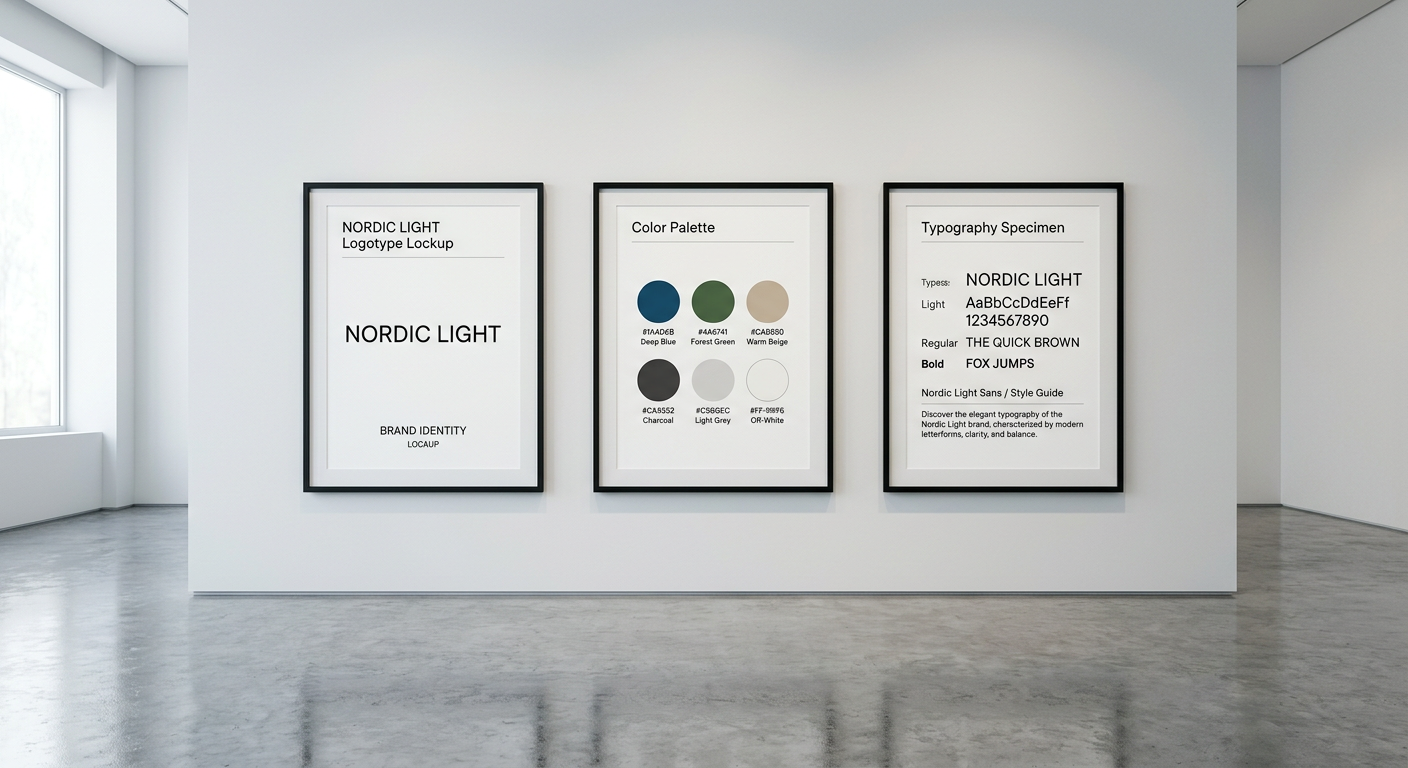
What distinguishes Thai brand identity work
Thai brand identity at its strongest balances a confident contemporary visual language with a specific cultural literacy — the ability to signal “Thai” without defaulting to temple silhouettes, traditional patterns, or gold-and-red colour cliché. The strongest Thai studios have moved past the decade of cultural-iconography-as-brand and arrived at a mature identity practice in which Thainess is expressed through the discipline of the work — restraint, proportion, typographic choice, colour relationship — rather than through explicit visual quotation. Thai branding won 23 D&AD Pencils between 2020 and 2025, with brand-identity categories the largest share of Thai D&AD placements (D&AD Archives).
This gallery is organised by client sector — hospitality, food and beverage, fashion and retail, technology and digital, arts and culture, and heritage and craft. Each section describes the conventions at work, what sophisticated work in the category achieves, and what to study.
Hospitality branding
Hospitality is one of the largest and most sophisticated Thai branding sectors, accounting for a disproportionate share of the country’s premium identity work — the combination of Thailand’s scale as a tourism destination and the specific visual expectation of international travellers creates sustained demand for brand work at a high craft level. Hospitality branding in Thailand divides roughly into three sub-categories: urban luxury, heritage and resort, and new-wave boutique.
What to study in strong Thai hospitality identity work:
- Wordmark typography as the primary identity carrier, often custom-drawn with precise weight and proportion
- Restrained colour palettes — most strong Thai hospitality identities run on two to four colours including a neutral
- Pattern and material used in touchpoint expression (menu, uniform, signage, printed collateral) rather than as logo-level decoration
- Photography art direction as part of the identity rather than an afterthought — hospitality identity systems succeed or fail in large part on photography consistency
Food and beverage branding
Food and beverage is the most entered category in Thai branding awards and also the most commercially important for most Thai studios — the combination of Thailand’s strong FMCG export pipeline and active domestic restaurant scene produces a steady demand for identity work across a wide price and craft spectrum. The category ranges from bold and vernacular-referenced identities for casual-dining and street-food-to-retail brands through highly disciplined premium-packaging-led identities for export FMCG.
Conventions across strong F&B branding work:
- Identity systems built around a distinctive wordmark or monogram that carries most of the brand recognition
- Colour-led palettes specific to the category — food-forward warm palettes for casual work, restrained palettes for premium
- Illustration and pattern used systematically across the product line with per-SKU differentiation
- Photography and product-photography style treated as part of the identity
Fashion and retail branding
Thai fashion and retail branding leans more toward restrained contemporary visual language than most other Thai branding categories — reflecting the global fashion industry’s typographic conservatism and the Thai fashion industry’s international retail aspirations. Identity work in this category tends toward the minimal, with typography and pattern carrying more of the identity weight than colour or illustration.
What to notice:
- Type-first identities with highly refined wordmark craft
- Restrained and often monochrome colour palettes
- Strong retail-environment design discipline integrated with graphic identity
- Photography and garment-styling as co-equal parts of brand identity
Technology and digital branding
Thai tech and digital branding is the fastest-growing brand-identity category in the country, driven by the expansion of Thai fintech, e-commerce, and digital-product companies; the visual language draws from global tech-identity conventions with selective Thai accent rather than ground-up cultural specificity. LINE Man Wongnai, KBTL Labs, SCB 10X, and True Digital have each commissioned substantial identity work in recent years; the collective effect has been the development of a Thai tech-branding aesthetic that reads as international-confident with light Thai signal.
Conventions at work:
- Geometric wordmarks with clear scaling across product surfaces
- System-design discipline across app icons, marketing, web, and in-product UI
- Motion integrated from identity conception rather than added post-hoc
- Colour systems with functional as well as expressive roles
Arts and culture branding
Arts and culture branding in Thailand covers museums, galleries, festivals, heritage institutions, and cultural-sector organisations; the category produces some of the country’s strongest conceptually-led identity work, often at budgets below premium-commercial but with unusual creative latitude. The Creative Economy Agency, TCDC, and Bangkok Art and Culture Centre commissions regularly anchor the year’s best Thai cultural-sector identity work.
What to study:
- Concept-led identity systems where the visual idea carries more weight than decorative craft
- Wider typographic experimentation — variable type, expressive type, type-as-image — than in commercial categories
- Strong curatorial integration between identity and programmed content
- Pattern and illustration used as exhibition-specific extension rather than logo-level decoration
Heritage and craft branding
Heritage and craft branding covers silk, ceramics, woodwork, traditional-medicine, and royal-project commercial brands — categories where authenticity signal is the primary brand lever and visual language draws heavily on Thai traditional design vocabulary. The design challenge is synthesis rather than quotation: how to deploy traditional visual language (Thai looped typography, traditional patterns, heritage-craft materials) in a way that reads as confident contemporary work rather than as pastiche.
What distinguishes strong heritage-brand work:
- Typographic restraint with traditional-form typography deployed in a single strategic position rather than as overall type system
- Colour palettes drawn from Thaitone or heritage-material relationships rather than contemporary trend
- Pattern used structurally (framing, border, back-panel) in a single proportion and weight across the system
- Material and print-craft decisions — foil stamp, letterpress, uncoated stock — treated as part of the identity
The Thai branding conversation in 2026
Two conversations are shaping Thai brand identity practice in 2026: the move away from decorative Thai-cultural-iconography toward more structural and typographic expressions of Thainess, and the adoption of motion as a first-class identity component rather than a post-production afterthought. Both are visible in the work of the strongest contemporary Thai studios and are likely to define the next cycle of Thai brand identity development.
The move beyond decorative iconography is a generational shift. Thai studios founded after 2015 — especially those with English-medium designers or international training — are less likely to default to temple silhouettes and pattern treatments than studios founded a decade earlier. The result is a more confident Thai branding practice that signals culture through restraint and proportion.
Motion as first-class identity is a tool-driven shift. As motion tools have become more accessible and as brand-system delivery has expanded to include social, digital product, and live-event surfaces, motion discipline has become a real differentiator between junior and senior Thai studios.
How this gallery is curated
ThaiGraph’s branding gallery is curated by the editorial team from public submissions, published award archives, studio portfolios, and direct studio outreach; inclusion is based on craft, originality, and contribution to the Thai branding tradition rather than commercial scale. The gallery aims to represent the range and evolution of Thai branding practice.
Submission criteria are the same as for all ThaiGraph inspiration galleries: original work, Thai production or Thai designers, in production or about to enter production, with credit to designers and studios.
Go deeper
For the studios producing this work, see the Thai Studio Directory. For the designers, see the Thai Designer Directory. For the industry context, see the Thai Graphic Design Industry overview. For related gallery work, see Best Thai Logo Design and Best Thai Packaging Design.
Information verified as of April 2026
Sources
- ThaiGa member firms delivered an estimated 2,400 branding projects across 2024 and 2025 combined.—ThaiGa — Member Activity Report 2025 (accessed Apr 3, 2026)
- Thai branding work won 23 D&AD Pencils between 2020 and 2025, with brand-identity categories representing the largest share of Thai D&AD placements.—D&AD — Annual Archives 2020–2025 (accessed Apr 4, 2026)
- Thailand's hospitality sector accounts for approximately 12% of GDP and is one of the largest consumers of premium brand-identity design work in the country.—Tourism Authority of Thailand — Sector Contribution Report 2024 (accessed Apr 5, 2026)