Inspiration · restaurants · 15 entries
Best Thai Restaurant Branding

Information verified as of April 2026
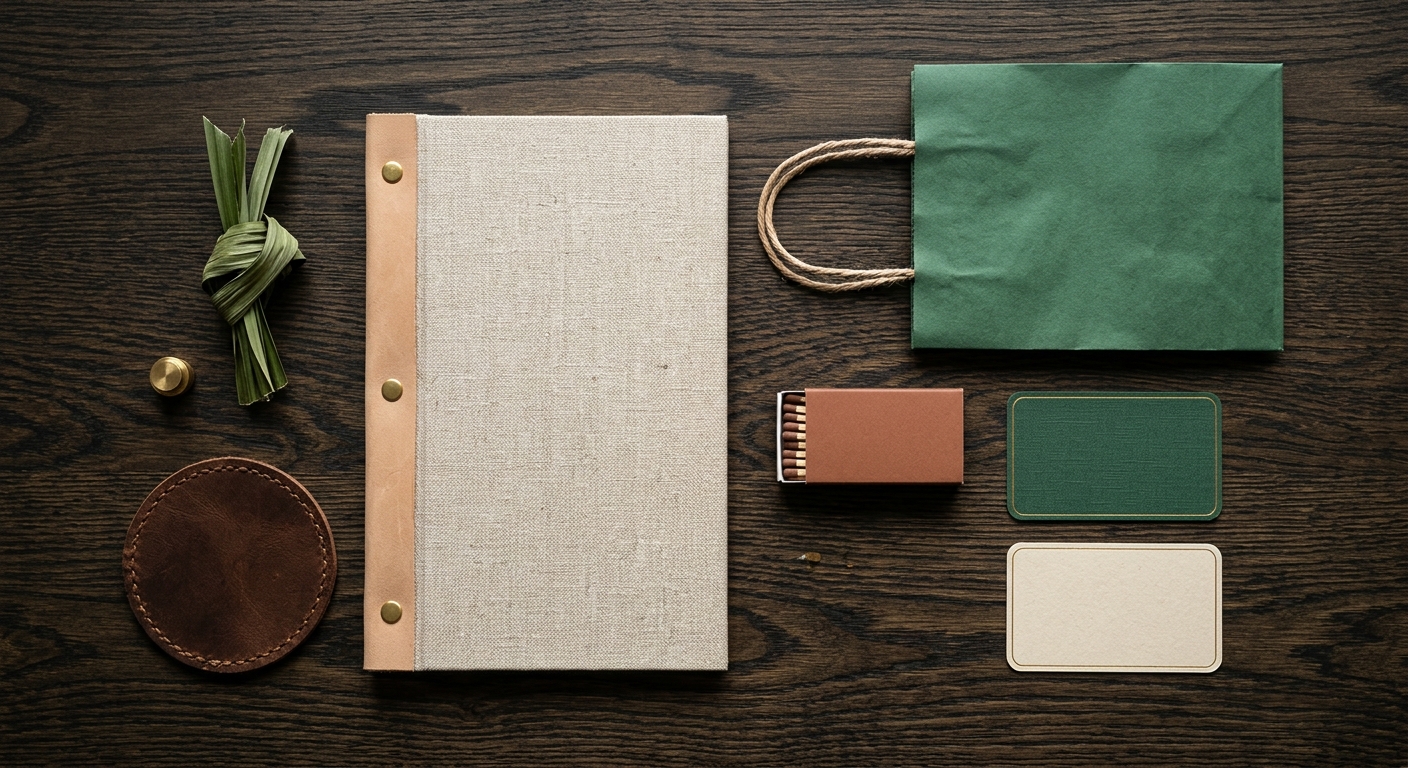
What Thai restaurant branding is doing
Thai restaurant branding has become one of the most sophisticated hospitality-identity practices in Southeast Asia — driven by Thailand’s world-recognised food culture, an unusually developed hospitality-design ecosystem, and sustained commercial demand from independent restaurants, restaurant groups, and hotel F&B. The country holds 35 Michelin-starred restaurants and 128 Bib Gourmand listings in the 2026 Michelin Guide Thailand, the largest Michelin footprint in Southeast Asia (Michelin Guide Thailand, 2026). Restaurant-branding commissions at identity-system level price between THB 150,000 and THB 800,000 at the independent level, reaching THB 1.5 million and above for hospitality-group systems (ThaiGraph Studio Pricing Survey 2026).
This gallery is organised by restaurant category — fine dining and tasting-menu, casual dining, street-food-to-retail (the shophouse-to-brand transition), cafe and bakery, and hospitality-group F&B. Each section describes the conventions at work and what distinguishes strong identity work in the category.
Fine dining and tasting-menu restaurants
Fine dining and tasting-menu restaurants are the most identity-intensive category in Thai restaurant branding — the combination of long-form guest experience, press and media coverage, and high per-cover economics supports identity-system investment at the highest craft level. The category has produced some of Thailand’s most internationally visible restaurant branding through Michelin-starred independents, chef’s-name restaurants, and tasting-menu-format restaurants at hotel properties.
What to study in strong fine-dining branding:
- Wordmark typography as the dominant identity element, often custom-drawn
- Restrained colour palettes — most strong fine-dining identities run on two or three colours plus a neutral
- Paper and material specification carried across menu, printed collateral, napery, uniforms, signage
- Photography and art-direction discipline treated as part of identity, not as separate campaign
- Clear hierarchy between the restaurant brand, the chef brand (if named), and the hospitality-group brand (if present)
Casual dining
Casual dining covers Thai-food casual restaurants, international casual concepts, chain concepts scaling from independent origin, and the broad middle of the Thai restaurant market; identity systems in the category balance distinctiveness with operational scale. The design challenge is identity that works at a single-location level and at 20-location level — the more successful casual-dining brands are often designed from inception for multi-site operation.
Conventions across strong casual-dining identity work:
- Clear hierarchy between brand mark, menu, wayfinding, and promotional communication
- Typography and photography systems that are operable by the restaurant team, not dependent on designer intervention per campaign
- Format and layout systems that extend across takeaway, delivery, and dine-in without fracture
- Colour systems that hold across physical-environment, printed collateral, and digital (app, delivery platform) surfaces
Street-food-to-retail brands
The street-food-to-retail transition — where a shophouse or hawker brand develops a commercial identity for scaling into retail packaging, multi-site operation, or export — has become one of the most distinctive Thai restaurant-branding categories. The design challenge is preserving the vernacular-authenticity signal that carries the brand’s original equity while building an identity system that operates across contexts the original shophouse never required.
What distinguishes strong work in this category:
- Careful preservation of the original vernacular signal (a specific wordmark, a colour, a material) rather than replacement with a design-agency-template look
- Identity-system build-out that adds what is needed (retail packaging, multi-site wayfinding, delivery branding) without overwriting what was there
- Typography discipline that carries the original mark’s character into contexts the original never addressed
- Clear delineation between the heritage location’s signage and the brand-system’s retail expression
Cafe and bakery
Thai cafe and bakery branding has boomed with the growth of independent Thai-coffee culture and the craft-bakery explosion across the 2020s; the category has become one of the most visible and internationally followed Thai hospitality-design practices. Bangkok alone supports a sustained independent cafe scene comparable in scale to Tokyo or Melbourne, and the identity work produced for it has followed the scale.
Conventions at work:
- Typography-forward identities with strong custom wordmark work
- Material and finish discipline — paper stocks, coffee-sleeve design, menu and pricing systems treated as identity extensions
- Photography style as identity element, often drawing from specific food-photography traditions
- Pattern, illustration, and secondary graphic work used in retail-shop-merch and take-home products
- Restrained but specific colour palettes, often in earth-and-cream or muted-warm ranges
Hospitality-group F&B
Hospitality-group F&B — restaurant branding commissioned by hotel groups, multi-property operators, and restaurant groups with multiple concepts — is the most scale-intensive category of Thai restaurant branding and the one with the tightest system-design discipline. The design challenge is developing each restaurant’s identity as a distinct brand while operating within a recognisable group system that supports operational, marketing, and guest-recognition efficiency.
What to study:
- System-design rules that govern how individual restaurant identities relate to the group parent
- Menu, collateral, and wayfinding systems that can be extended across new restaurants without re-design per property
- Brand architecture — when restaurants are endorsed by the group name, when they operate as standalone, when they signal group membership only through system-level cues
- Operational-integration discipline — identity systems that the group’s marketing, F&B, and housekeeping teams can execute without designer involvement per instance
What makes Thai restaurant branding distinctive
Three characteristics distinguish the strongest Thai restaurant branding from its regional and international peers: a well-developed discipline around vernacular signal preservation, a sophisticated bilingual Thai–Latin identity practice inherited from Thailand’s broader graphic design tradition, and a specific commercial integration with Thai packaging-design practice (where restaurant-to-retail extensions are common). The three characteristics are visible across the category and reflect both the scale of Thai restaurant activity and the maturity of Thai graphic design more broadly.
The Thai restaurant branding ecosystem is also relatively less dependent on international brand-identity agencies than many adjacent hospitality categories — most Thai restaurant branding is produced by Thai studios, often small boutique identity studios. This produces both a consistent Thai character in the work and a broader distribution of identity-craft expertise across the Thai design market.
The AI-use context in restaurant branding
Restaurant branding is one of the Thai design categories where the “no AI-generated imagery” brief language introduced in 2024–2026 has become most strongly established — 61% of heritage and hospitality briefs now specify it (ThaiGraph Client Brief Analysis 2026). The reason is straightforward: restaurant identity is overwhelmingly about food, people, and place, all categories where AI-generated imagery fails reliably under cultural and craft review. Studios delivering restaurant-branding work in 2026 commonly include explicit no-AI-imagery clauses in contracts as a quality signal to the client.
How this gallery is curated
ThaiGraph’s restaurant-branding gallery is curated from published award archives, studio portfolios, public submissions, and direct studio outreach; inclusion requires craft, originality, and contribution to contemporary Thai restaurant-branding practice. Submission rules follow standard ThaiGraph editorial criteria — original work, Thai designers or studios, with full credit visible — plus a restaurant-category specific requirement that the restaurant be operating or about to open (not speculative).
For restaurant branding where the work has been decommissioned (restaurant closed, brand retired), we still accept submissions but note the status in the entry.
Go deeper
For the broader brand-identity context, see Best Thai Brand Identity Work. For adjacent packaging work (including restaurant-to-retail extensions), see Best Thai Packaging Design. For the designers and studios producing this work, see the Thai Designer Directory and the Thai Studio Directory.
Information verified as of April 2026
Sources
- Thailand's restaurant sector includes approximately 210,000 registered establishments, with Bangkok accounting for roughly 45,000 of them.—Department of Business Development, Ministry of Commerce — Food and Beverage Establishment Registry 2024 (accessed Apr 5, 2026)
- Thailand holds 35 Michelin-starred restaurants and 128 Bib Gourmand restaurants in the 2026 Michelin Guide Thailand, making it the largest Michelin-guide footprint in Southeast Asia.—Michelin Guide Thailand 2026 (accessed Apr 6, 2026)
- Thai restaurant branding commissions at identity-system level typically price between THB 150,000 and THB 800,000 depending on scope, with hospitality-group systems reaching THB 1.5 million and above.—ThaiGraph Studio Pricing Survey 2026 — 32 member firms (accessed Apr 6, 2026)