Thai font · OFL
Bai Jamjuree
ใบจามจุรี

Information verified as of April 2026
อ่านหน้า ฟอนต์ Bai Jamjuree เป็นภาษาไทย — พร้อมลิงก์ดาวน์โหลดและวิธีติดตั้ง →
Download Bai Jamjuree — free →
How to install & use
- Windows — Download the .zip, unzip it, then right-click the .ttf/.otf file → “Install”.
- macOS — Double-click the .ttf/.otf file, then click “Install Font” in Font Book.
- Web — Embed from Google Fonts with a <link> tag or @import — grab the snippet on the specimen page.
Try Bai Jamjuree
Type your own text to preview Bai Jamjuree live. Adjust size and weight, then grab the embed code.
What Bai Jamjuree is
Bai Jamjuree is a display-oriented humanist Thai sans-serif from Cadson Demak, named for the Jamjuree tree (ต้นจามจุรี) whose organic silhouette inspired the font’s soft, flowing curves. It ships six weights with matching italics under the SIL Open Font License on Google Fonts.
The design sits between a display face and a mid-size editorial face. The letterforms are distinct enough to carry poster and headline work, but disciplined enough to hold at 14-18pt for subheadings and short paragraphs. That range makes Bai Jamjuree unusually versatile in the Cadson Demak catalogue.
The font is a fixture in Thai creative-sector branding — design studios, art festivals, craft and artisan brands — because it balances modernity (loopless construction) with a tactile, hand-drawn tone that geometric faces like Kanit deliberately avoid.
Character design and tone
Bai Jamjuree uses flowing organic curves, subtle stroke modulation, and open loopless terminals that feel pen-drawn rather than computer-constructed. The head of ก curves softly inward; ถ and ภ have wide, open bowls with gentle terminal flares.
Stroke contrast is moderate — noticeably more than Kanit or Prompt but less than a classical serif. The pen-like modulation is most visible at heavier weights, where verticals thicken while the connecting strokes stay lighter. Tone marks and vowel signs carry the same organic feel, drawn with slight curves rather than straight strokes.
Italic cuts rotate at a modest angle (around 8-10°) and keep the same organic letter construction rather than switching to a true italic skeleton. The Latin companion is a humanist sans with the same soft modulation — reminiscent of Trirong’s Latin or a softened Lato.
Weights and availability
Bai Jamjuree ships six weights from ExtraLight (200) to Bold (700) with matching italics across the full range — a relatively rare feature in free Thai fonts. Download from Google Fonts or the Cadson Demak catalogue.
File sizes run around 45-60KB per weight in WOFF2. For production, a four-file loadout (Regular, Regular Italic, SemiBold, SemiBold Italic) handles editorial layouts at about 200KB total.
Best use cases
Bai Jamjuree is a strong default for creative-industry brands that want a modern Thai sans with warmth and tactility. Strong briefs:
- Design studio and creative agency branding, Thai and bilingual
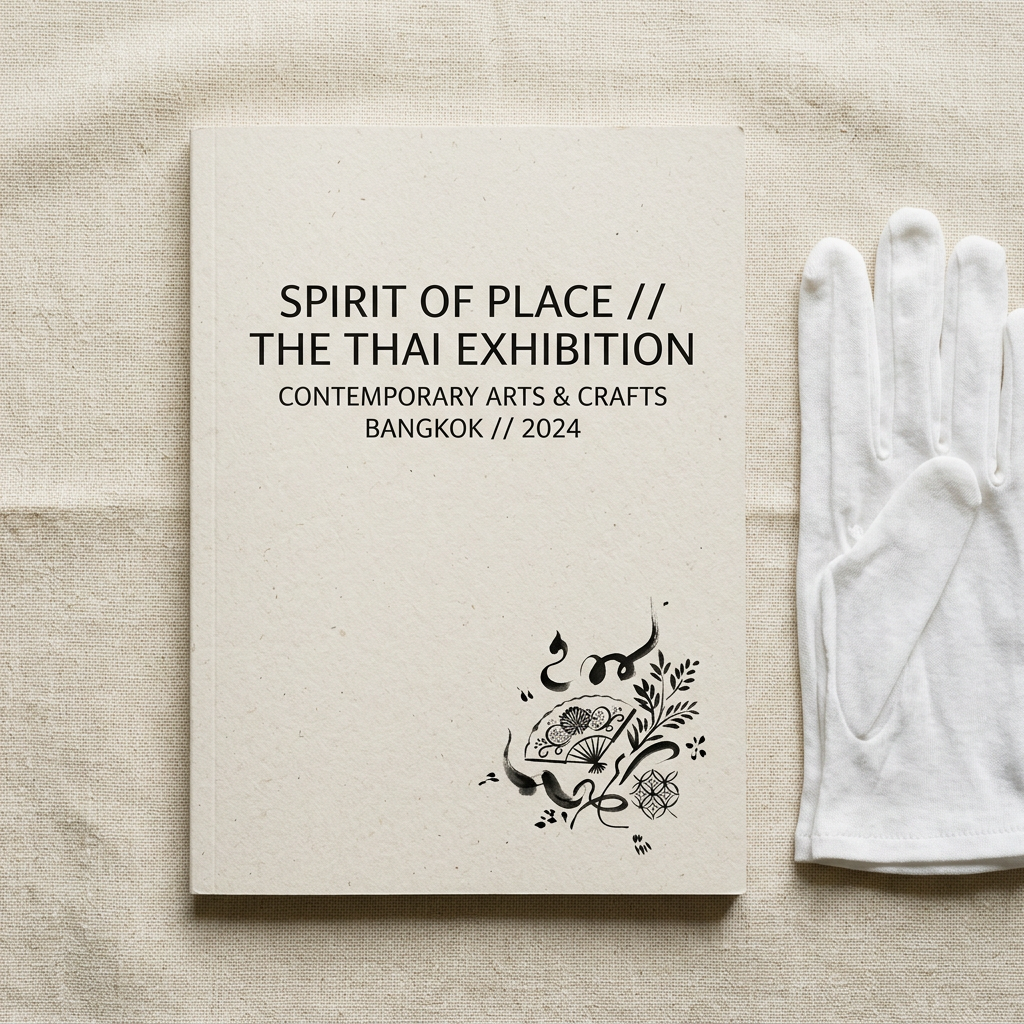
- Art festivals, exhibition catalogues, museum publication design
- Craft and artisan product branding — ceramics, textiles, natural skincare
- Independent publishing — literary magazines, poetry books, small-press work
- Cafe and restaurant brands that want “designed” without being corporate
Where it doesn’t fit: enterprise and fintech UI (too warm, use IBM Plex Sans Thai), long-form body text (Sarabun, Mitr, or Niramit are more neutral), and government documents.
Pairings
Bai Jamjuree pairs well with humanist Latin sans-serifs, transitional serifs, and editorial body typefaces. Three pairings:
- Lato — humanist Latin sans with matching warmth and modulation
- Lora — transitional serif for editorial body copy under Bai Jamjuree display
- Noto Serif Thai — if the body needs to stay Thai, the looped serif contrasts well against Bai Jamjuree’s loopless display
See the fonts directory for more editorial pairing options.
Licensing
Bai Jamjuree is released under the SIL Open Font License and is free for commercial use, modification, and bundling in products provided the OFL notice travels with the file. Verify at the Google Fonts specimen or the Cadson Demak page.
Frequently asked questions about Bai Jamjuree
Is Bai Jamjuree free for commercial use?
Yes — Bai Jamjuree is free for both personal and commercial use under the SIL Open Font License (OFL). You can use it in client work, apps, products, and websites at no cost, and self-host or embed it from Google Fonts. The only OFL condition is that you don’t sell the font files on their own.
How many weights does Bai Jamjuree have?
Bai Jamjuree ships in 6 weights: ExtraLight, Light, Regular, Medium, SemiBold, Bold. Pick a heavier weight for display and headlines, and a Regular or lighter weight for body text and long-form reading.
Does Bai Jamjuree support Latin and English characters?
Yes — Bai Jamjuree includes a Latin character set alongside Thai, so it can set English and Thai in one typeface. That makes it a practical choice for bilingual branding, packaging, and UI.
Where can I download Bai Jamjuree?
Download Bai Jamjuree free from Google Fonts. You can install the desktop files, self-host the WOFF2 files, or embed it directly with a <link> tag or @import — grab the embed code from the live preview above.
What fonts are similar to Bai Jamjuree?
The closest alternatives to Bai Jamjuree are Mitr, Fahkwang, Niramit. They share a similar style and use case, so they’re the first faces to compare if you need a different weight range, license, or price.
Who designed Bai Jamjuree?
Bai Jamjuree was designed by Cadson Demak at Cadson Demak, released in 2017. Full designer credit and the primary source are listed at the bottom of this page.
Information verified as of April 2026
Sources
- Bai Jamjuree was designed by Cadson Demak and distributed through Google Fonts under the SIL Open Font License.—Google Fonts specimen page for Bai Jamjuree (accessed Apr 10, 2026)
- Bai Jamjuree ships six weights with matching italics covering Thai and Latin.—Cadson Demak catalogue entry for Bai Jamjuree (accessed Apr 10, 2026)