Thaitone · purple
Royal Purple
ม่วง
(muang)

Information verified as of April 2026
- HEX
-
#5C2A83 - RGB
-
92, 42, 131 - CMYK
-
30, 68, 0, 49 - HSL
-
274°, 51%, 34% - Tailwind
-
bg-[#5c2a83] - Thaitone index
- #11
What Royal Purple is
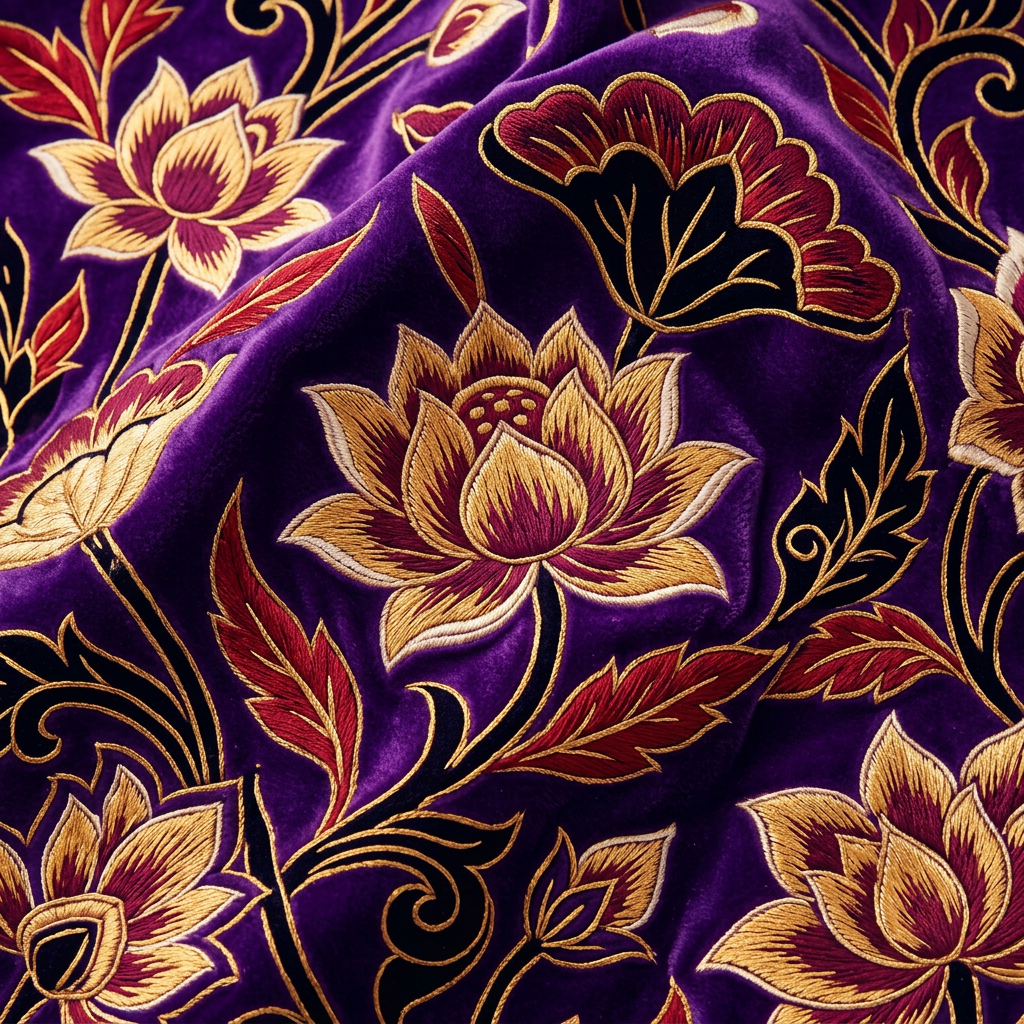
Thai Royal Purple (ม่วง, muang) is the deep violet of Saturday weekday color and mangosteen-dye royal textile — a rich, blue-leaning purple at #5c2a83 that reads as the most formal of the Thai weekday hues. The word muang refers both to the color and to the mangosteen fruit, whose skin was historically used as a natural purple dye source.
Pittayamatee’s Thaitone entry places the color within the royal (หลวง) register. It is more saturated and darker than lavender and carries a distinct blue bias rather than the red bias of fashion magenta. The color also appears on Princess Sirindhorn’s institutional colors — she was born on Saturday.
Where this color traditionally appears
The canonical reference is Saturday weekday dress in the si prajam wan system — purple is the color worn on Saturdays in the traditional astrological weekday palette. It appears on the Saturday robe of Buddha images in temples that display the full seven-robe cycle.
Mangosteen-skin dye is documented on northern Thai cotton and silk for restricted ceremonial use. The color is also the institutional color of Princess Maha Chakri Sirindhorn, which means purple merchandise, banners, and publications from royal-patronage foundations — particularly Chaipattana and SUPPORT — use this register.
What it means in Thai culture
Royal Purple signals Saturday, Princess Sirindhorn, and ceremonial formality. The Royal Institute Dictionary documents muang as the weekday color of Saturday. People born on Saturday wear purple on their birthdays, and temples display a purple-robed Buddha image on the Saturday altar.
Because of Princess Sirindhorn’s association, purple carries active royal-institutional weight in contemporary Thailand. Purple ribbons and banners often mark her birthday on 2 April. The color is considered respectful to use in cultural and educational contexts and is common in royal-patronage product lines.
Using Royal Purple in modern design
Royal Purple works best for royal-patronage institutions, premium cosmetics, and Thai dessert and fruit brands. Three concrete briefs:
- Royal foundation and institutional identity — Chaipattana-style branding uses purple at 80–90% with thin gold rules; the color codes as Princess Sirindhorn’s institutional patronage.
- Premium Thai fruit and dessert packaging — purple field with mangosteen iconography; reads as native Thai fruit at export retail.
- Luxury cosmetics and perfume for the Thai and regional market — purple with rice paper and rose accents; the hue sits premium without falling into generic violet.
It fails for male-targeted streetwear and tech where purple reads off-register, and for casual food where it codes as unusually formal.
Complementary colors
Three pairings carry Royal Purple cleanly. With Royal Gold, the combination is the canonical institutional palette — purple and gold is the directly referenced royal pairing. With Rice Paper, the purple softens into editorial elegance suitable for publishing and invitation work. With Buddha Yellow, the pairing reads as Saturday-paired-with-Monday, used in weekday-color cultural editorial and Thai calendar design.
Browse the full Thaitone system or open the color picker to build a palette.
Information verified as of April 2026
Sources
- Documented in the Thaitone system as one of 168 traditional Thai colors.—Pittayamatee, P. (1988). Thai Colour. Amarin Printing, Bangkok. (accessed Apr 10, 2026)
- Purple is the Thai weekday color for Saturday, documented in the traditional weekday color system (si prajam wan) recorded in the Royal Institute Dictionary.—Royal Institute Dictionary, Office of the Royal Society, Bangkok (revised edition 2011) (accessed Apr 10, 2026)