Thaitone · green
Royal Teal
เขียวนกยูง
(khiao nok yung)

Information verified as of April 2026
- HEX
-
#1F5F5B - RGB
-
31, 95, 91 - CMYK
-
67, 0, 4, 63 - HSL
-
176°, 51%, 25% - Tailwind
-
bg-[#1f5f5b] - Thaitone index
- #7
What Royal Teal is
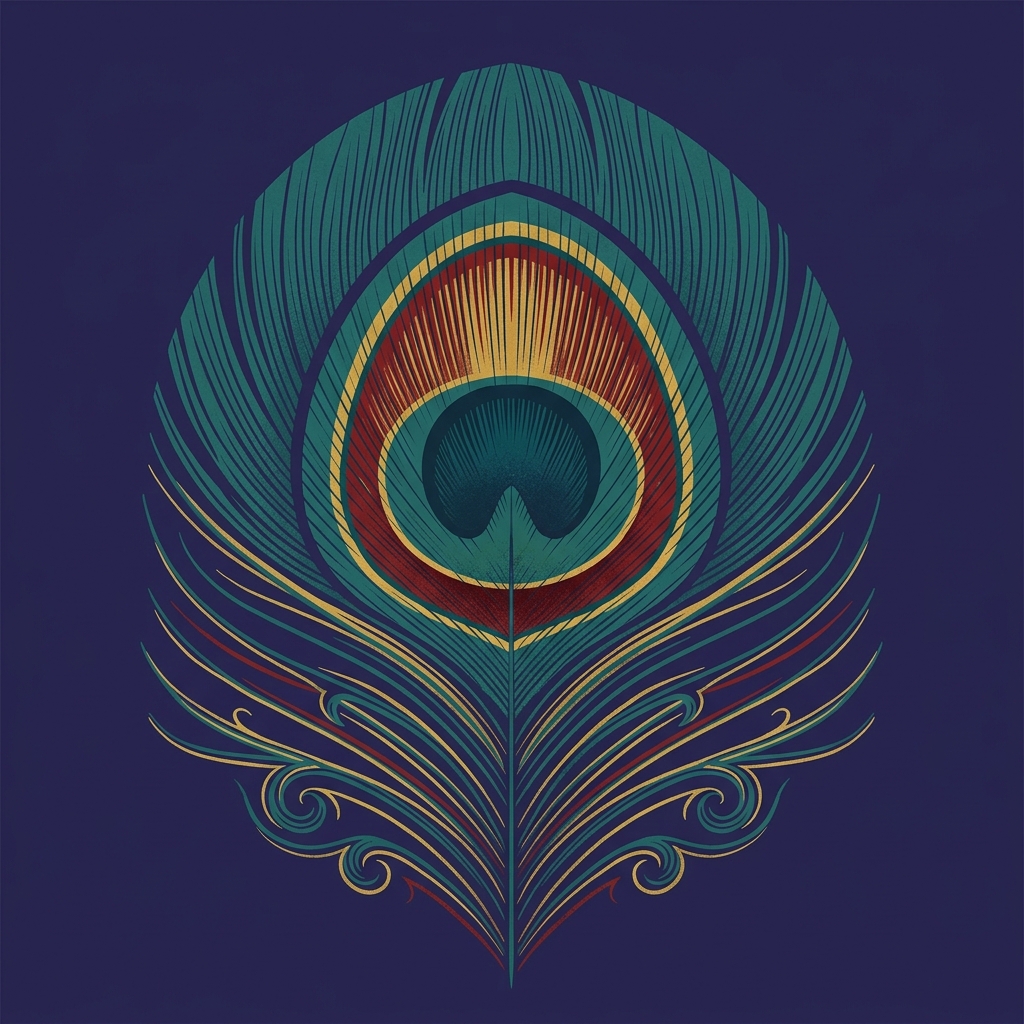
Royal Teal (เขียวนกยูง, khiao nok yung) is the deep peacock green-blue of Thai royal regalia and Rattanakosin court textiles — a saturated, cool blue-green at #1f5f5b that reads as both formal and distinctly Southeast Asian. The Thai name translates literally as “peacock green,” referring specifically to the dark green-blue of the peacock’s neck, which appears on royal fan handles and architectural tile in Bangkok palaces.
The color is darker and cooler than Western “teal” digital defaults. Pittayamatee’s Thaitone entry places it at HSL 176, 51, 25. Its register is royal rather than natural — this is not the green of rice fields but of enamelled porcelain and silk brocade.
Where this color traditionally appears
The canonical reference is the peacock-green ground of bencharong royal porcelain — five-colour enamel ware commissioned by the Siamese court from Jingdezhen kilns in the 18th and 19th centuries. The same hue appears on royal fan lacquer, court textile backgrounds in pha yok brocade, and architectural glazed tile on the roofs of the Grand Palace complex.
It is the standard ground for the collar and cuff panels on Chakri-court uniform jackets and for royal umbrella linings. Peacock-feather motifs in temple mural painting use this exact green-blue as the dominant eye color.
What it means in Thai culture
Royal Teal signals royalty, sophistication, and Sino-Thai aesthetic heritage — a color distinctly associated with court objects rather than everyday use. The peacock itself is a royal attribute across Southeast Asian monarchies, and its specific green-blue translates into Thai textiles and ceramics as Siamese court color.
The color carries less weekday association than Royal Gold or Saffron but stronger Sino-Thai crossover reading. It signals that an object was commissioned or used within court circles. In contemporary Thai graphic design it is read as heritage-sophisticated rather than tropical.
Using Royal Teal in modern design
Royal Teal works best for premium hospitality, heritage ceramics and crafts, and luxury packaging aiming at Sino-Thai heritage. Three concrete briefs:
- Boutique hotel identity in Bangkok or Phuket — 70–80% teal with gold typography; reads as royal heritage without being heavy-handed.
- Bencharong-inspired ceramic and tableware brands — full-field teal with cream and gold accents at 5–10% each; directly references the historic palette.
- Premium gin, tea, and perfume packaging — teal glass or teal-on-cream label systems; the cool green-blue carries luxury and sophistication.
It fails for casual food, children’s brands, and wellness where lighter greens are preferred.
Complementary colors
Three pairings carry Royal Teal cleanly. With Royal Gold, the combination reconstructs bencharong porcelain — the historic Sino-Thai court palette, kept to 85/15. With Rice Paper, the teal reads as Ming-inflected Thai editorial — suitable for catalogues, menus, and long-form publishing. With Lacquer Black, the teal reads as deeper and more jewel-like, appropriate for perfume, spirits, and luxury accessory branding.
Browse the full Thaitone system or open the color picker to build a palette.
Information verified as of April 2026
Sources
- Documented in the Thaitone system as one of 168 traditional Thai colors.—Pittayamatee, P. (1988). Thai Colour. Amarin Printing, Bangkok. (accessed Apr 10, 2026)
- Peacock green-blue is documented on Rattanakosin-era royal textile sets (pha yok) and on the enamelled bencharong ware commissioned by the Siamese court from Chinese kilns.—Conway, S. (1992). Thai Textiles. British Museum Press, London. (accessed Apr 10, 2026)