Thaitone · gray
Elephant Grey
เทาช้าง
(thao chang)

Information verified as of April 2026
- HEX
-
#6A6D6A - RGB
-
106, 109, 106 - CMYK
-
3, 0, 3, 57 - HSL
-
120°, 1%, 42% - Tailwind
-
bg-[#6a6d6a] - Thaitone index
- #24
What Elephant Grey is
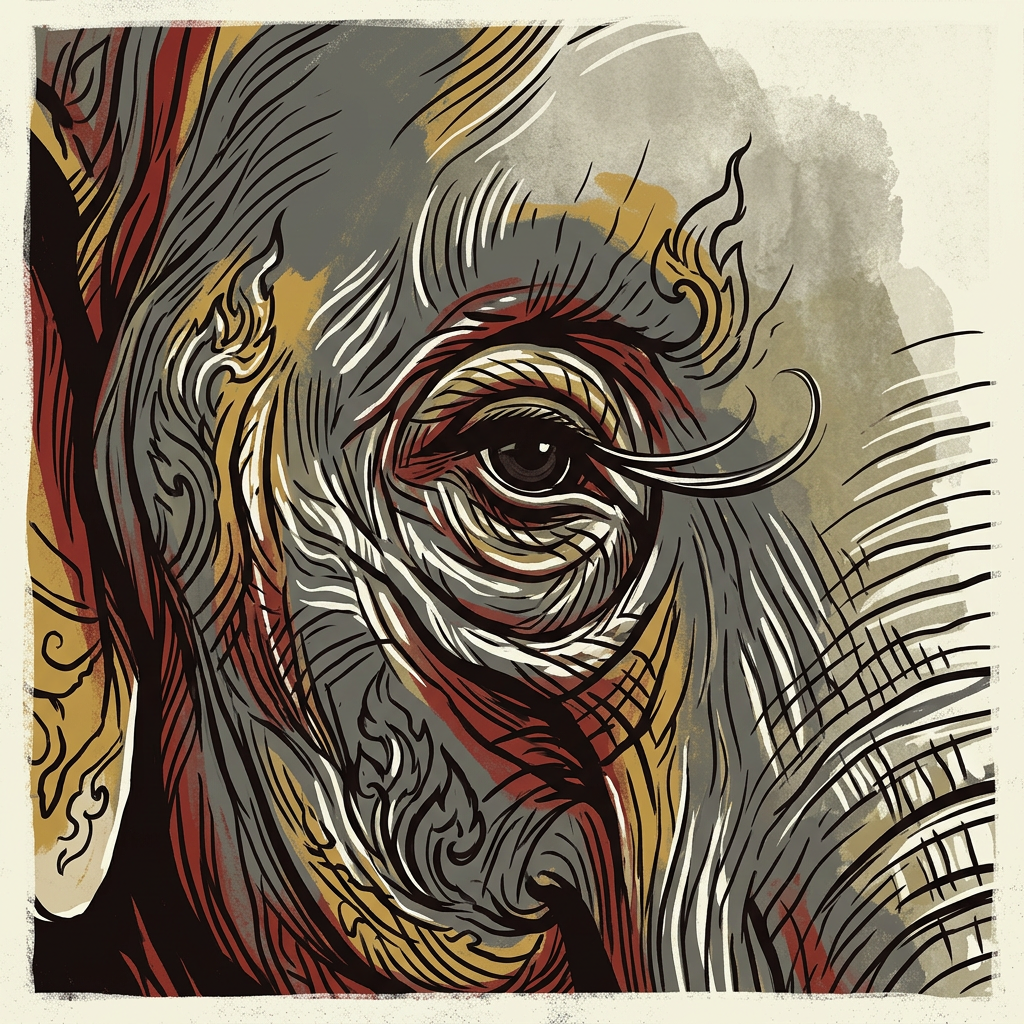
Thai Elephant Grey (เทาช้าง, thao chang) is the mid neutral grey of Asian elephant skin — a warm balanced grey at #6a6d6a with a faint green undertone that reads as natural rather than industrial. The reference is the wet-hide color of Elephas maximus, the species that holds national symbolic status in Thailand.
Pittayamatee’s Thaitone entry places the color in the nature and royal crossover category. Elephant grey sits slightly warmer than digital neutral grey and carries a barely perceptible green cast that makes it pair better with natural-dye colors than cool industrial greys do.
Where this color traditionally appears
The canonical reference is the royal white elephant, which despite the name is actually this grey-neutral register in live photographs — albinism standards in Thai elephant tradition rely on specific skin and nail markings rather than pure white color. The color describes working elephants across Thai elephant sanctuaries in Chiang Mai, Surin, and Chiang Rai.
The color also appears on carved sandstone temple sculpture at Sukhothai and Ayutthaya historical parks, on Ban Chiang grey-fired pottery (a pre-historic Thai ceramic tradition), on the stone elephants at Wat Phra Kaew, and on traditional Thai ceremonial blankets (pha mai) used in royal elephant parades.
What it means in Thai culture
Elephant Grey signals national symbol, strength, and continuity — a neutral grey with royal weight distinct from Western grey’s corporate defaults. The elephant is a protected national animal, and anything referencing it carries latent political-symbolic weight.
The Royal Institute Dictionary documents chang (elephant) as one of the most culturally loaded animal terms in Thai, and the color associated with it inherits that weight. It is considered safe across design categories but reads as distinctly Thai rather than generic neutral when viewers are culturally aware of the reference.
Using Elephant Grey in modern design
Thai Elephant Grey works best for heritage hospitality, elephant conservation organisations, and premium Thai brands aiming at masculine sophistication. Three concrete briefs:
- Elephant conservation and tourism identity — elephant grey as dominant color with gold or vermilion accent; used by sanctuaries, tour operators, and conservation foundations.
- Premium Thai spirits and coffee branding — grey as base with rice paper and black type; reads as masculine Thai heritage at the premium register.
- Luxury hospitality with Thai heritage positioning — grey surfaces in interior branding, paired with teak and celadon; sits between contemporary minimalism and heritage reference.
It fails for children’s, food, and wellness categories where warmer colors are preferred.
Complementary colors
Three pairings carry Elephant Grey cleanly. With Rice Paper, the combination is the premium editorial register — warm cream with warm grey for Thai heritage publishing and hospitality identity. With Royal Gold, the pairing evokes the royal elephant ceremonial palette — grey hide with gold howdah and regalia — suitable for cultural publishing. With Lacquer Black, the grey sits as mid-tone between black and cream, a useful tonal structure for premium packaging and editorial layouts.
Browse the full Thaitone system or open the color picker to build a palette.
Information verified as of April 2026
Sources
- Documented in the Thaitone system as one of 168 traditional Thai colors.—Pittayamatee, P. (1988). Thai Colour. Amarin Printing, Bangkok. (accessed Apr 10, 2026)
- The Asian elephant (Elephas maximus) holds national symbolic status in Thailand and was the central motif on the Siamese flag from 1855 to 1917.—Royal Institute Dictionary, Office of the Royal Society, Bangkok (revised edition 2011) (accessed Apr 10, 2026)