Thaitone · yellow
Jasmine
ดอกมะลิ
(dok mali)

Information verified as of April 2026
- HEX
-
#F5EFDC - RGB
-
245, 239, 220 - CMYK
-
0, 2, 10, 4 - HSL
-
46°, 56%, 91% - Tailwind
-
bg-[#f5efdc] - Thaitone index
- #20
What Jasmine is
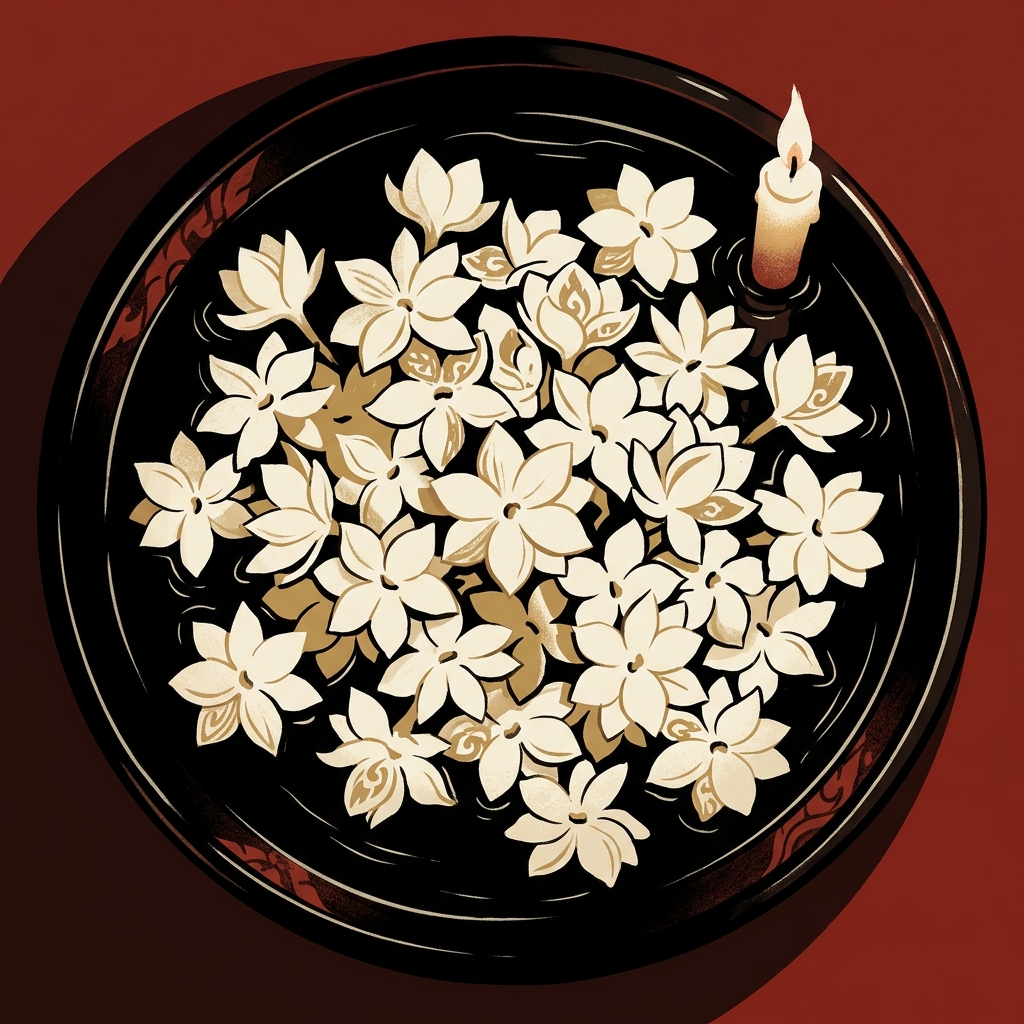
Thai Jasmine (ดอกมะลิ, dok mali) is the warm cream of jasmine flowers and Thai ceremonial decoration — a very pale yellow-cream at #f5efdc that sits between rice paper and pale buddha yellow on the Thai neutral register. The reference is the petal of Jasminum sambac, the Thai jasmine species used in garlands and offerings.
Pittayamatee’s Thaitone entry documents the color within the ceremonial register. It is warmer and slightly more saturated than Rice Paper, reading as ceremonial cream rather than craft-paper cream. The color sits close to premium paper stocks used for Thai wedding invitations and royal publication covers.
Where this color traditionally appears
The canonical reference is the strung jasmine garland (phuang malai) offered at temples, weddings, and as a Mother’s Day tribute on 12 August. These small white flowers, threaded on silk cord, are one of the most visible cultural objects in Thai daily life.
The color also appears on wedding invitation and funeral invitation stock, on Thai ceremonial napkin linen at royal dinners, on traditional Thai mattress ticking (fuuk) used at temple events, and on the outer layers of traditional Thai wedding dresses before saturation accents are added. Jasmine-colored candles are standard at Buddhist ordination ceremonies.
What it means in Thai culture
Jasmine signals Mother’s Day, purity, and ceremonial respect — the flower itself is culturally layered, and the color carries its associations. The Royal Institute Dictionary documents dok mali as the flower of Mother’s Day, tied to Queen Sirikit’s birthday.
The color carries no weekday association but strong ceremonial weight. It is appropriate for Mother’s Day campaigns, wedding and ordination invitations, and premium cultural publishing. It avoids the clinical feeling of pure white while remaining clearly “ceremonial cream” rather than craft-paper cream.
Using Jasmine in modern design
Thai Jasmine works best for ceremonial publishing, luxury hospitality, and premium packaging aiming at warm elegance. Three concrete briefs:
- Wedding and ceremonial publishing — jasmine stock for invitations and announcement cards; premium uncoated paper in this tone is the standard for Thai royal-register celebrations.
- Luxury hospitality identity — jasmine as brand ground with vermilion or crimson accent; warmer and more hospitality-coded than rice paper alone.
- Premium Thai packaging for perfume, tea, and dessert — jasmine background with gold foil or black typography; reads as ceremonial and refined.
It fails in contexts where bright or cool neutral is wanted — tech, sportswear, and modernist architecture publishing prefer rice paper or true white.
Complementary colors
Three pairings carry Jasmine cleanly. With Siamese Crimson, the combination is the court ceremonial palette — cream ground with deep red accent, used for state publications and formal hospitality. With Lacquer Black, the pairing sharpens jasmine into editorial register for premium cultural publishing and catalogue work. With Royal Teal, the combination evokes bencharong porcelain with cream ground and peacock-green accent — elegant heritage positioning.
Browse the full Thaitone system or open the color picker to build a palette.
Information verified as of April 2026
Sources
- Documented in the Thaitone system as one of 168 traditional Thai colors.—Pittayamatee, P. (1988). Thai Colour. Amarin Printing, Bangkok. (accessed Apr 10, 2026)
- Jasmine (Jasminum sambac, dok mali) is the official Thai flower of Mother's Day, tied to Queen Sirikit's birthday on 12 August, and is the traditional offering at Thai weddings and ordinations.—Royal Institute Dictionary, Office of the Royal Society, Bangkok (revised edition 2011) (accessed Apr 10, 2026)