Thaitone · gold
Champa
จำปา
(champa)

Information verified as of April 2026
- HEX
-
#E9B24A - RGB
-
233, 178, 74 - CMYK
-
0, 24, 68, 9 - HSL
-
39°, 78%, 60% - Tailwind
-
bg-[#e9b24a] - Thaitone index
- #21
What Champa is
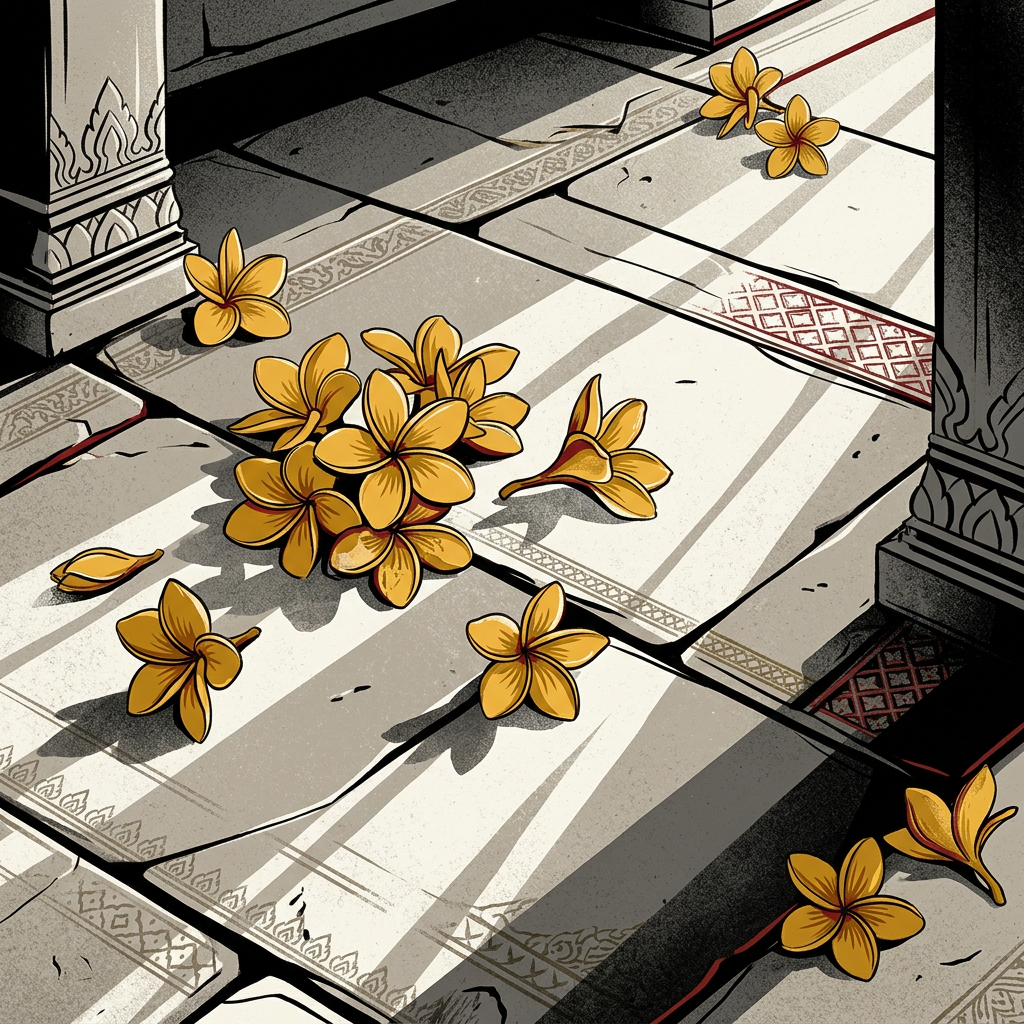
Thai Champa (จำปา, champa) is the mellow golden yellow of the champa flower and heritage hospitality — a warm saturated yellow-gold at #e9b24a that sits between Buddha Yellow and Royal Gold on the Thai yellow register. The reference is the petal of Magnolia champaca, a fragrant tropical flower used in temple offerings and Thai perfumery.
Pittayamatee’s Thaitone entry places the color in the nature and ceremonial crossover category. It reads as softer and more organic than Royal Gold and warmer than Buddha Yellow. Unlike the royal yellows, Champa is considered a safe, non-politically-loaded yellow for commercial branding.
Where this color traditionally appears
The canonical reference is the champa flower itself — offered in small temple arrangements, used in bai si ceremonial structures, and distilled into traditional Thai perfume. The flower appears across northern Thai and Lao cultural contexts as a sacred offering material.
The color appears on traditional Lao-Thai women’s ceremonial textiles (Champa is the national flower of Laos and carries Mekong-regional significance), on festival banners for Buddhist Lent, on hand-painted umbrella decorations in Bor Sang, and on the label systems of Thai heritage perfume houses like Harnn and Thann. It also appears in the natural-dye output of khamin (turmeric) combined with champa petal infusion.
What it means in Thai culture
Champa signals cross-Mekong cultural heritage, fragrance, and warm ceremony — a nature-coded yellow without monarchic restriction. The flower carries romantic and nostalgic associations in both Thai and Lao folk literature.
The color reads as culturally Lao-Thai or northern Thai rather than central Bangkok Rattanakosin. It is appropriate for contexts that want yellow warmth without invoking the monarchy. Because of its natural-flower reference, it reads as soft and organic rather than institutional.
Using Champa in modern design
Thai Champa works best for heritage perfume and cosmetics, hospitality aiming at Mekong-regional heritage, and premium food packaging. Three concrete briefs:
- Natural perfume and cosmetics brand identity — champa as primary color with cream accents; directly references the traditional Thai perfume palette.
- Boutique hotel identity in Chiang Mai, Luang Prabang-adjacent, and Mekong corridor — champa with teak and rice paper; reads as cross-cultural Lanna-Lao heritage.
- Premium Thai food — honey, palm sugar, dessert — champa packaging with black type; warm and appetising without tipping into saffron religious register.
It fails for tech, fintech, and casual fast food where the warmth reads as too premium-craft.
Complementary colors
Three pairings carry Champa cleanly. With Lacquer Black, the combination is the standard premium Thai cosmetics palette — champa on black at 20-30%, used across Thai luxury fragrance. With Royal Teal, the pairing is bencharong-adjacent, pairing warm yellow with peacock green for heritage tableware and hospitality. With Rice Paper, the champa softens into warm editorial register suitable for publishing and premium packaging on uncoated stock.
Browse the full Thaitone system or open the color picker to build a palette.
Information verified as of April 2026
Sources
- Documented in the Thaitone system as one of 168 traditional Thai colors.—Pittayamatee, P. (1988). Thai Colour. Amarin Printing, Bangkok. (accessed Apr 10, 2026)
- Champa (Magnolia champaca, formerly Michelia champaca) is native to mainland Southeast Asia and produces fragrant cream-yellow to golden-yellow flowers used in Thai offerings and perfumery.—Forest Herbarium, Department of National Parks, Thailand — Flora of Thailand Project, 2020 (accessed Apr 10, 2026)