Thaitone · red
Mangosteen
มังคุด
(mangkhut)

Information verified as of April 2026
- HEX
-
#5A2333 - RGB
-
90, 35, 51 - CMYK
-
0, 61, 43, 65 - HSL
-
343°, 44%, 25% - Tailwind
-
bg-[#5a2333] - Thaitone index
- #22
What Mangosteen is
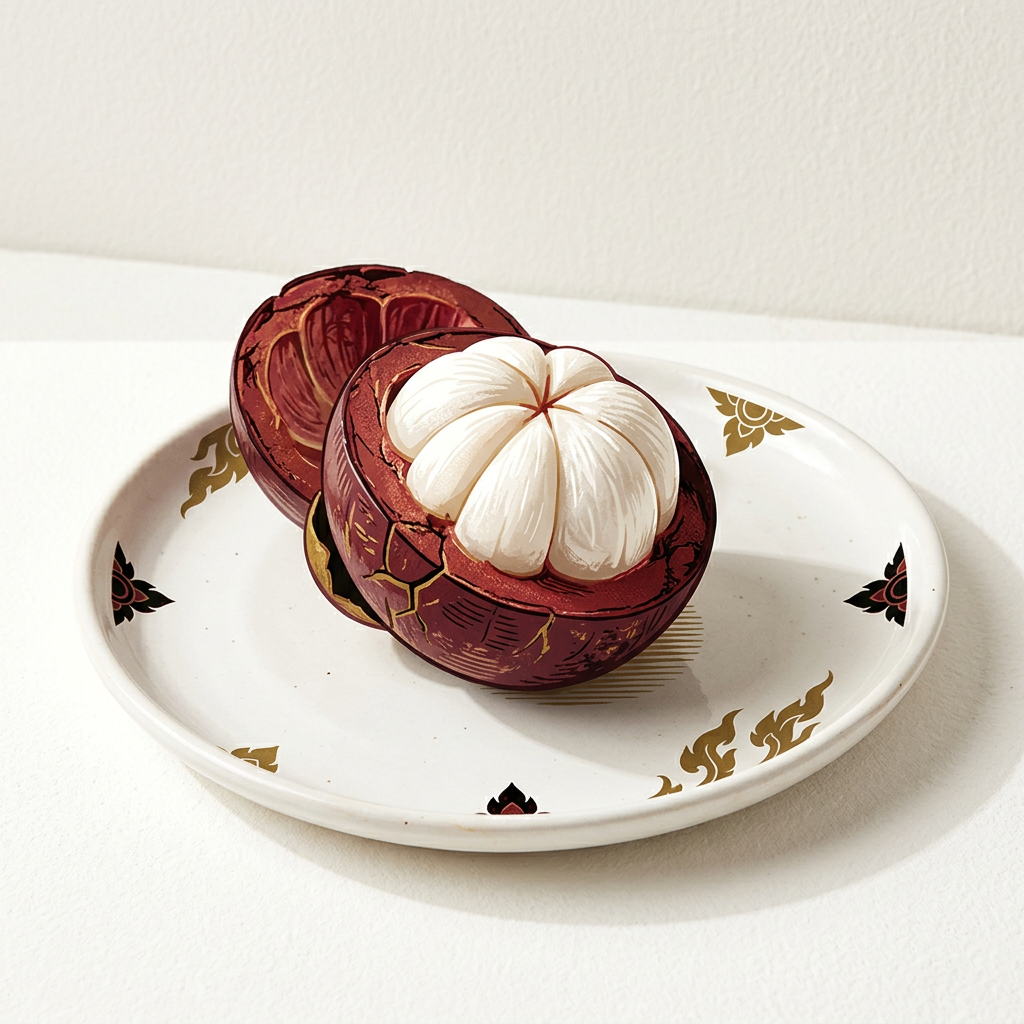
Thai Mangosteen (มังคุด, mangkhut) is the deep red-purple of mangosteen rind — a dark, slightly brown-biased wine-purple at #5a2333 that sits between Royal Purple and Siamese Crimson on the Thaitone register. The reference is the thick outer skin of Garcinia mangostana, the fruit known as “queen of fruits” in Thai and Lao tradition.
Pittayamatee’s Thaitone entry places the color within the nature (thammachat) category. It reads darker than most contemporary purples and carries enough red to read as wine or oxblood rather than overtly violet. The natural dye extracted from the rind produces variable shades depending on fermentation time and mordant.
Where this color traditionally appears
The canonical reference is the dried and ground mangosteen rind used as a natural dye across rural Thai and Lao silk weaving, particularly in Prachin Buri and Chanthaburi provinces where the fruit is cultivated. The same rind is used in traditional Thai medicine for skin treatments.
The color appears on natural-dyed pha sin wrap skirts at ceremonial depth, on handmade paper treated with fruit-rind pigment, on Thai traditional medicine packaging, and on the deeper register of lac-and-mangosteen combination dye textiles. It is also a signature color for Thai mangosteen export packaging aimed at premium fruit retail in East Asia.
What it means in Thai culture
Mangosteen signals rural abundance, traditional medicine, and natural-dye craft — a quiet, non-royal purple-red with nature associations. The fruit itself carries cultural weight as the counterpart to durian in Thai folk classification and as a traditional gift fruit.
The color carries no weekday restriction and is not a court color. It reads as rural craft and natural heritage, distinct from Royal Purple’s institutional register. Its use in contemporary design has grown alongside the Thai natural-dye and slow-fashion movements.
Using Mangosteen in modern design
Thai Mangosteen works best for craft silk, natural cosmetics, and Thai fruit and food export packaging. Three concrete briefs:
- Natural cosmetics and skincare brand identity — mangosteen with cream typography and minimal gold; references traditional Thai medicinal heritage.
- Premium Thai fruit and food export packaging — mangosteen color with hand-lettered type; reads as authentically Thai and exotic at international retail.
- Craft silk and natural-dye textile brand — mangosteen as dominant color with rice paper; signals the natural-dye tradition directly to craft-conscious buyers.
It fails for fintech and tech where the depth reads as too warm, and for children’s categories where the depth is off-register.
Complementary colors
Three pairings carry Mangosteen cleanly. With Rice Paper, the combination is the natural-dye publishing register — deep fruit-purple on cream stock, used by craft silk and natural cosmetics brands. With Royal Gold, the pairing lifts mangosteen toward ceremonial elegance suitable for premium publishing and gift packaging. With Silk Rose, the combination is the craft-silk register of the same dye process at different concentrations — a direct textile reference for fashion and cosmetics.
Browse the full Thaitone system or open the color picker to build a palette.
Information verified as of April 2026
Sources
- Documented in the Thaitone system as one of 168 traditional Thai colors.—Pittayamatee, P. (1988). Thai Colour. Amarin Printing, Bangkok. (accessed Apr 10, 2026)
- Mangosteen (Garcinia mangostana) rind has been used historically as a natural dye source for silk and cotton in Thailand, producing deep purple and red-brown tones depending on mordant concentration.—Conway, S. (1992). Thai Textiles. British Museum Press, London. (accessed Apr 10, 2026)