Thaitone · blue
Indigo
คราม
(khraam)

Information verified as of April 2026
- HEX
-
#26314A - RGB
-
38, 49, 74 - CMYK
-
49, 34, 0, 71 - HSL
-
222°, 32%, 22% - Tailwind
-
bg-[#26314a] - Thaitone index
- #8
What Indigo is
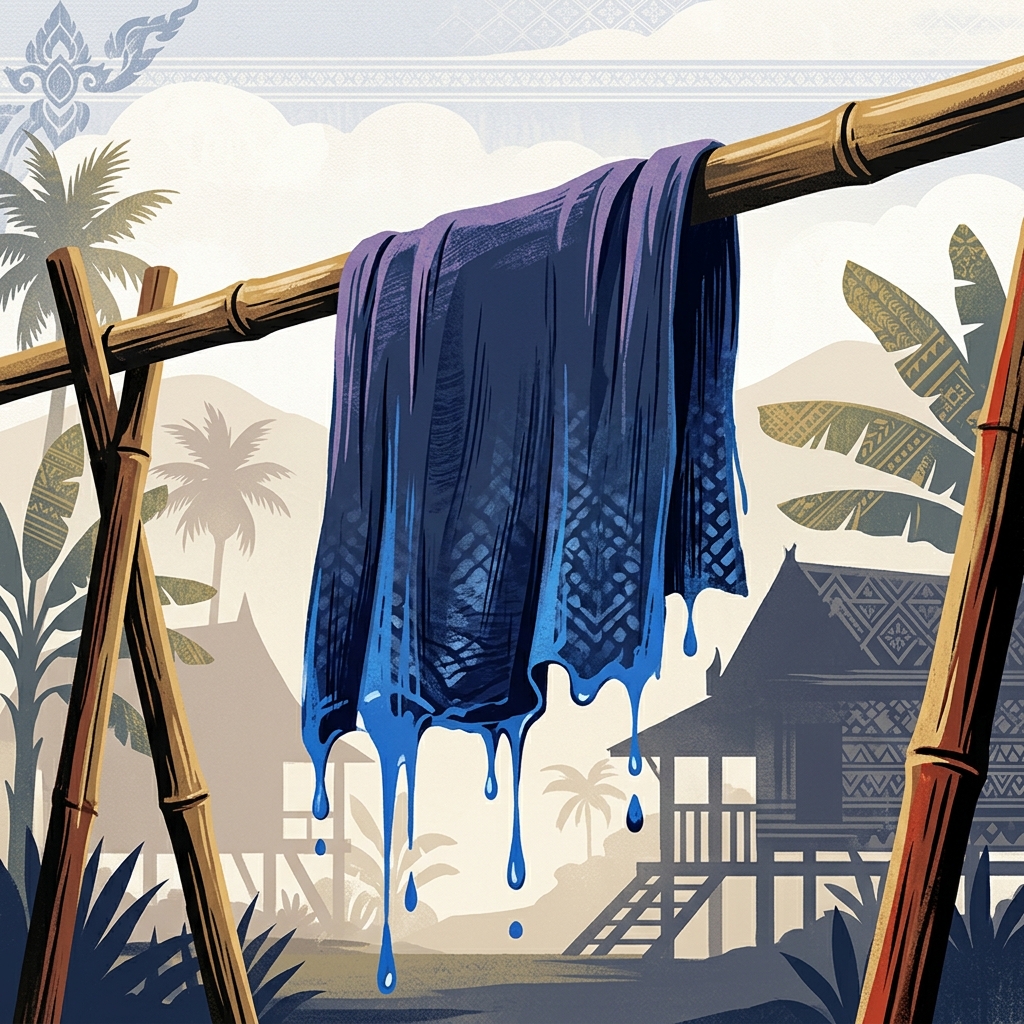
Thai Indigo (คราม, khraam) is the deep blue-black of fermented-vat indigo dye used on northeastern and northern Thai cotton — a dark, slightly purple-biased blue at #26314a that reads as the ground color of rural Thai textile tradition. The pigment is Indigofera tinctoria fermented in clay vats, with depth achieved through repeated dip cycles.
The color sits darker than Japanese ai indigo and slightly cooler than Hmong indigo due to the specific fermentation temperatures in Isan and Phrae. Pittayamatee’s Thaitone register places it within everyday and craft categories. It is distinct from royal navy or western indigo fashion defaults.
Where this color traditionally appears
The canonical reference is pha mor hom cotton shirts from Phrae province and pha khraam indigo silk from Sakon Nakhon. These are the two most geographically specific Thai textile traditions built around indigo.
It also appears on Hmong and Karen hill-tribe cotton garments, Isan pha khao ma checked sarongs, traditional Lao-Thai women’s wrap skirts (pha sin) at deeper dye intensities, and on the dyed cotton bundles sold at Chatuchak and Warorot markets. The color is also the ground for pha mor ram ritual textiles in Isan shamanic practice.
What it means in Thai culture
Indigo signals rural craft, regional identity, and everyday Thai textile work — distinct from the royal or temple register. The Royal Institute Dictionary documents khraam as the standard term for both the plant and the color.
The color is not weekday-coded at court level but is strongly region-coded: Sakon Nakhon and Phrae identify themselves by it, with both provinces running indigo festivals annually. The craft revival movement since the 2010s has elevated natural indigo into a design-conscious marker of Thai sustainability and slow-fashion.
Using Indigo in modern design
Indigo works best for heritage fashion, craft tourism, and sustainability-positioned consumer brands. Three concrete briefs:
- Slow-fashion and craft textile brand identity — full indigo field with rice paper or silk rose accents; directly evokes the Sakon Nakhon and Phrae traditions.
- Heritage tourism for northern and northeastern Thailand — indigo with gold signage typography; reads as regional and craft-rooted rather than generic luxury.
- Premium Thai spirits and coffee — indigo label with cream typography; the color sits close enough to navy for international shelf presence while coding Thai regional for informed buyers.
It fails for most fast-moving consumer goods where the depth reads as underlit rather than premium.
Complementary colors
Three pairings carry Indigo cleanly. With Rice Paper, the pairing is the canonical craft textile register — indigo thread on cream cotton, translated directly into editorial and packaging. With Royal Gold, the indigo grounds a royal-institutional palette, usable for cultural publishing and museum identity. With Silk Rose, the combination shifts into a softer craft-fashion register used by contemporary Thai slow-fashion labels.
Browse the full Thaitone system or open the color picker to build a palette.
Information verified as of April 2026
Sources
- Documented in the Thaitone system as one of 168 traditional Thai colors.—Pittayamatee, P. (1988). Thai Colour. Amarin Printing, Bangkok. (accessed Apr 10, 2026)
- Natural indigo (Indigofera tinctoria) fermented dye is the defining pigment of Sakon Nakhon and Phrae mor hom cotton textiles in northeastern and northern Thailand.—Conway, S. (1992). Thai Textiles. British Museum Press, London. (accessed Apr 10, 2026)