Thaitone · red
Lac Red
ครั่ง
(khrang)

Information verified as of April 2026
- HEX
-
#A83F3A - RGB
-
168, 63, 58 - CMYK
-
0, 62, 65, 34 - HSL
-
3°, 49%, 44% - Tailwind
-
bg-[#a83f3a] - Thaitone index
- #17
What Lac Red is
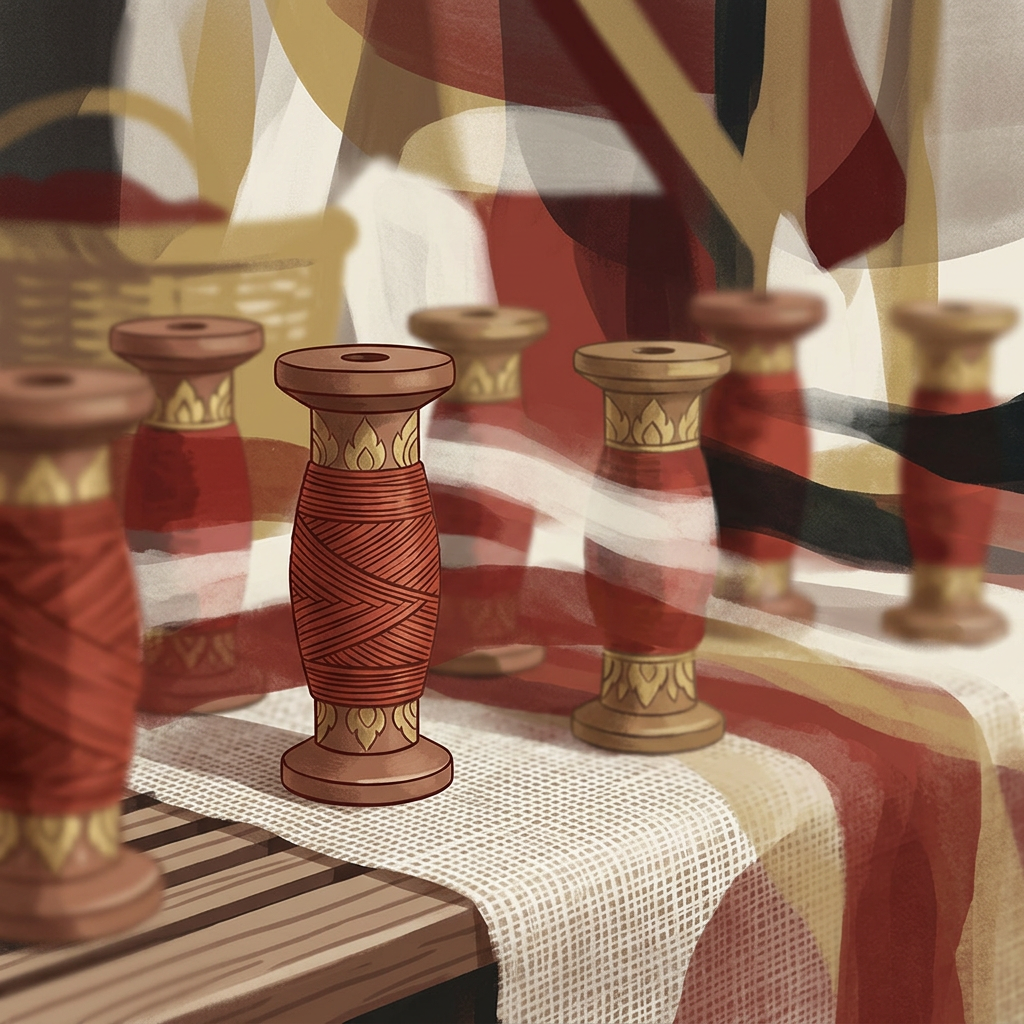
Thai Lac Red (ครั่ง, khrang) is the natural-dye brick red of Pu-Tai matmii silk and Isan textile tradition — a medium-saturation warm brown-red at #a83f3a that represents lac-dyed silk fixed with alum mordant. The word khrang refers specifically to the resinous secretion of Kerria lacca scale insects harvested from host trees across Thailand.
Pittayamatee’s Thaitone entry documents this as the alum-mordanted rather than iron-mordanted lac variant. Iron mordant produces the deeper Siamese Crimson; alum produces this lighter brick-red. The distinction matters because the same raw material yields two documented Thaitone colors depending on fixative.
Where this color traditionally appears
The canonical reference is Pu-Tai and Lao-Thai silk mat mi (ikat) tube skirts from Khon Kaen, Roi Et, and Kalasin provinces. These textiles use lac red as the warp color in combination with indigo weft to produce the complex tie-dyed patterns that Isan weavers are known for.
The color also appears on pha sin tin chok ceremonial skirts at lower saturation, on ceremonial monk cloth wrappers (sabong) in rural temples, and as the ground for Pu-Tai men’s festival jackets. It is the historic alternative to imported red dyes and remains in use at natural-dye studios like Sakhon Nakhon’s Mae Tang and at Ban Tha Sawang silk village in Surin.
What it means in Thai culture
Lac Red signals craft silk, Isan regional identity, and natural-dye heritage — a color without royal or religious restriction. The Royal Institute Dictionary documents khrang as both the insect and the dye.
The color reads as Pu-Tai or Lao-Thai specifically in Thai regional terms. It is distinct from the more central-Thai court reds (Thai Vermilion and Siamese Crimson) and is understood by Thai designers as the rural natural-dye register. Craft-revival movements have elevated it into premium slow-fashion positioning.
Using Lac Red in modern design
Thai Lac Red works best for craft silk brands, heritage hospitality in Isan, and slow-fashion positioning. Three concrete briefs:
- Craft silk house and matmii brand identity — lac red with indigo and cream; directly recreates the Pu-Tai textile palette on labels and lookbooks.
- Heritage hospitality in northeastern Thailand — lac red as dominant accent in Khon Kaen and Roi Et hotel branding; reads as Isan heritage without requiring literal textile references.
- Natural-dye workshop and craft-tourism identity — lac red with rice paper and hand-rendered type; signals artisanal authenticity.
It fails for premium luxury aiming at court-red register (use Siamese Crimson instead) and for mass-market consumer goods where the subtlety reads as muted.
Complementary colors
Three pairings carry Lac Red cleanly. With Rice Paper, the combination is the standard craft-silk publishing palette — lac red print on cream stock for lookbooks and catalogues. With Indigo, the pairing is the direct reconstruction of Pu-Tai matmii — the warp-weft color combination translated into brand identity. With Lacquer Black, the lac red shifts toward editorial formality for premium publishing and gallery catalogue work.
Browse the full Thaitone system or open the color picker to build a palette.
Information verified as of April 2026
Sources
- Documented in the Thaitone system as one of 168 traditional Thai colors.—Pittayamatee, P. (1988). Thai Colour. Amarin Printing, Bangkok. (accessed Apr 10, 2026)
- Lac dye (khrang) from Kerria lacca resin produces a brick-red hue on silk when fixed with alum, used across northeastern Thai matmii weaving traditions.—Conway, S. (1992). Thai Textiles. British Museum Press, London. (accessed Apr 10, 2026)