Thaitone · green
Pandan
เขียวใบเตย
(khiao bai toei)

Information verified as of April 2026
- HEX
-
#387D42 - RGB
-
56, 125, 66 - CMYK
-
55, 0, 47, 51 - HSL
-
129°, 38%, 35% - Tailwind
-
bg-[#387d42] - Thaitone index
- #23
What Pandan is
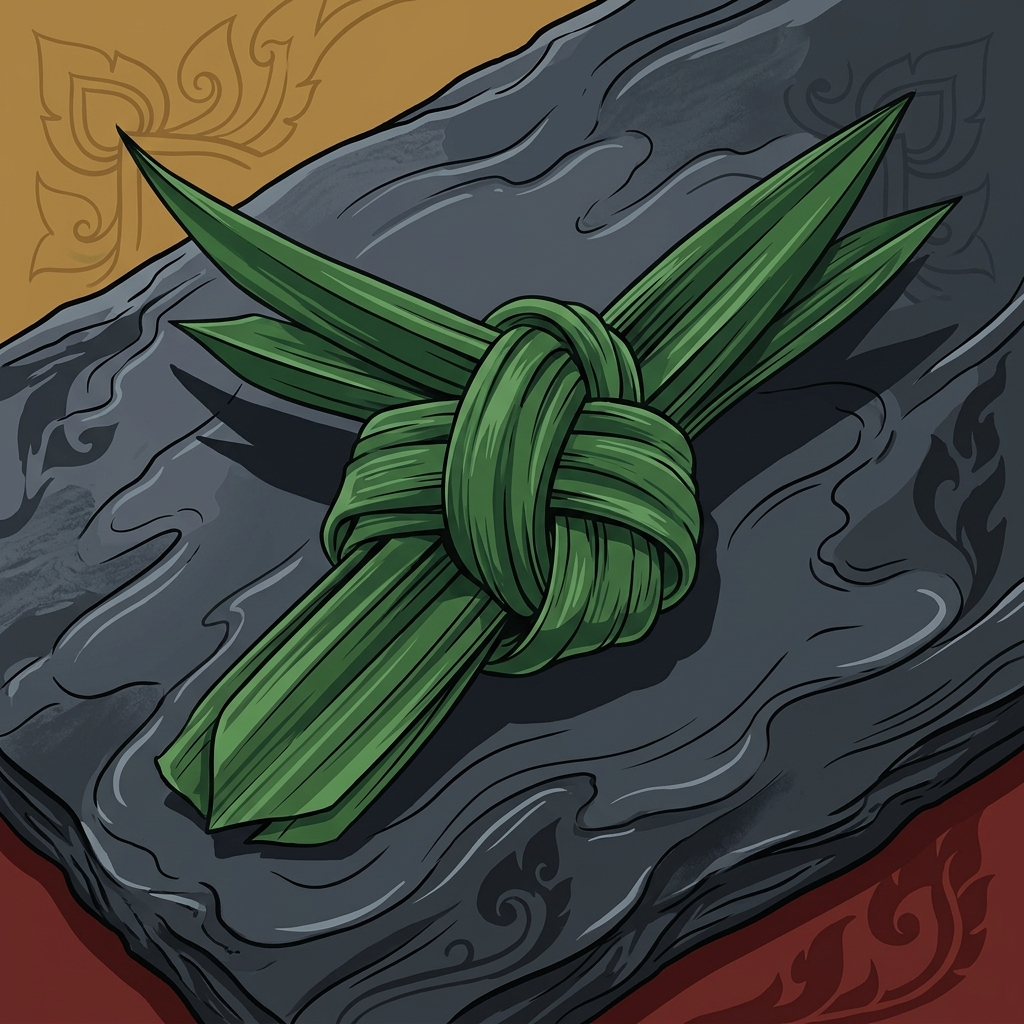
Thai Pandan (เขียวใบเตย, khiao bai toei) is the fresh grass-green of pandan leaf — a mid-saturation slightly blue-biased green at #387d42 that sits between Banana Leaf and a deeper forest green on the Thaitone register. The reference is the juice extracted from Pandanus amaryllifolius leaves, used as both flavoring and natural green coloring in Thai dessert preparation.
Pittayamatee’s Thaitone entry places the color within the nature (thammachat) and everyday (wisai) crossover category. It reads cooler than Banana Leaf green, reflecting the specific chlorophyll extraction produced by crushing and straining pandan leaves. The color registers as clean, fresh, and food-linked.
Where this color traditionally appears
The canonical reference is Thai dessert color — kanom chan layered pudding, lot chong coconut noodles, and pandan-infused sticky rice preparations. The color describes pandan leaf juice itself, not the darker green of the intact leaf.
It appears on traditional Thai dessert packaging at markets, on signage for Thai bakeries specialising in kanom, on the green register of woven bai si offering structures at lower saturation, and on the natural-dye cotton of some Karen and northern Thai village textile work that uses pandan combined with other plant sources. The color is widely used in contemporary Thai specialty food branding.
What it means in Thai culture
Pandan signals fresh food, dessert, and Thai culinary tradition — a warm, welcoming green without royal or religious restriction. The Royal Institute Dictionary documents bai toei as the botanical term, with khiao bai toei emerging as the color descriptor in the 20th century.
The color carries no weekday coding but strong food-culture association. Pandan is one of the most immediately recognisable Thai food flavours globally, and the color communicates that cultural coding at shelf. It is considered safe across commercial categories that benefit from food and freshness signalling.
Using Pandan in modern design
Thai Pandan works best for Thai dessert brands, specialty food and beverage, and wellness positioning aiming at natural freshness. Three concrete briefs:
- Thai dessert and bakery brand identity — pandan at 70–80% field with cream and hand-rendered type; reads as authentic and natural to both Thai and export markets.
- Specialty food — tea, coconut milk, Thai curry export — pandan as label accent with black typography; sits between authenticity and international premium.
- Wellness and natural beauty branding — pandan with rice paper and gold accent; clean, natural, and food-adjacent rather than clinical.
It fails for tech, finance, and premium hospitality where the food register is off-message.
Complementary colors
Three pairings carry Pandan cleanly. With Rice Paper, the combination is the canonical Thai food publishing palette — pandan print on cream stock, used across Thai specialty food and cookbook publishing. With Thai Vermilion, the pairing evokes temple festival offerings where green leaf and vermilion ceremonial cloth appear together. With Jasmine, the pandan reads as specialty dessert packaging and bakery identity, warm enough to stay appetising.
Browse the full Thaitone system or open the color picker to build a palette.
Information verified as of April 2026
Sources
- Documented in the Thaitone system as one of 168 traditional Thai colors.—Pittayamatee, P. (1988). Thai Colour. Amarin Printing, Bangkok. (accessed Apr 10, 2026)
- Pandan leaf (Pandanus amaryllifolius) is the primary natural green coloring agent in Thai dessert preparation and remains in use across Thai, Malay, and Indonesian cuisines.—Sitthithanyakij, T. (2010). Thai Food Culture. Chulalongkorn University Press, Bangkok. (accessed Apr 10, 2026)